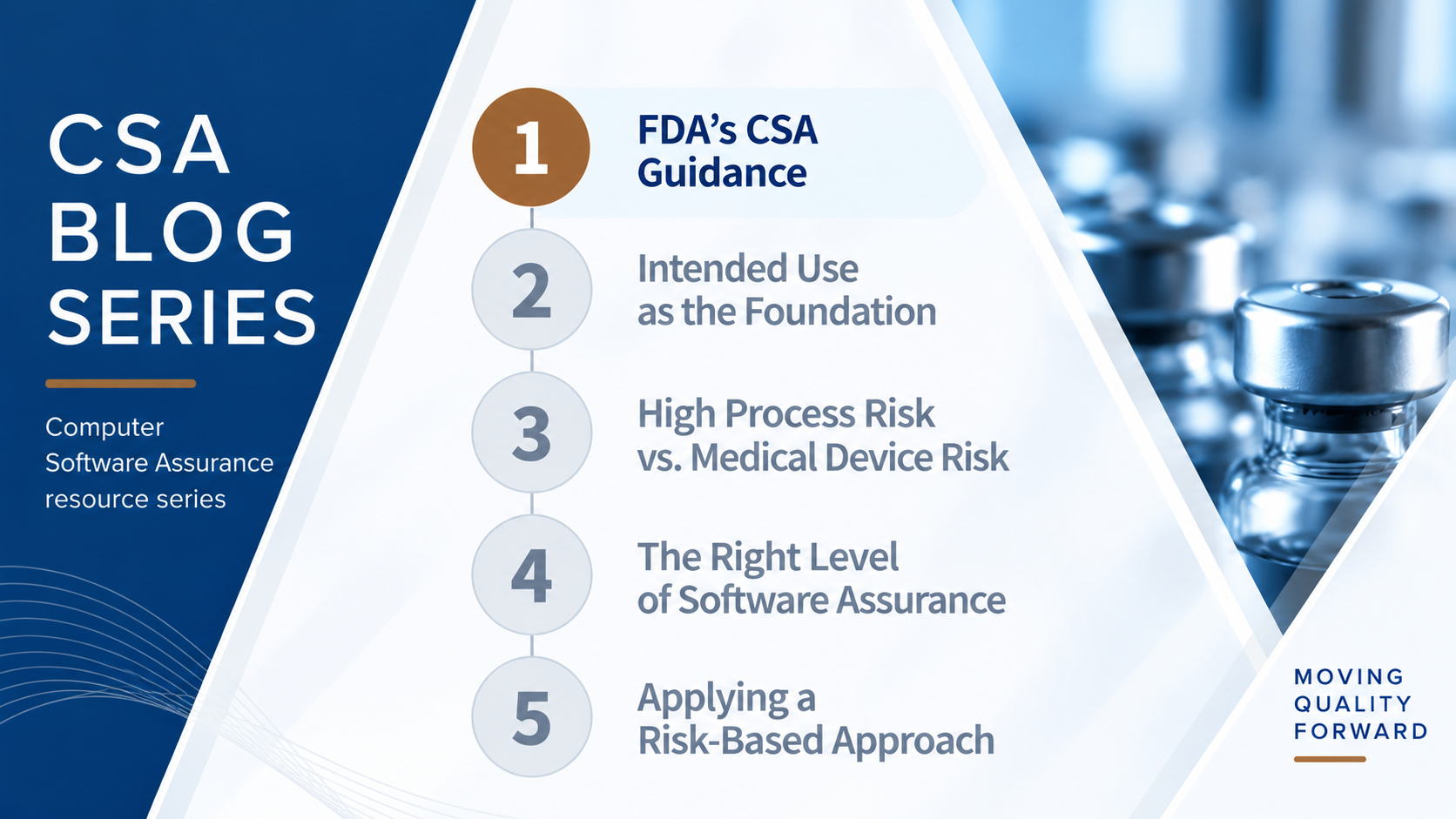
Computer Software Assurance (CSA) Resource Series – Article 1 of 5 Software plays a larger role in medical device manufacturing today than ever before. From production equipment and environmental monitoring systems to quality management systems, electronic records, inspection technologies, and analytics platforms, manufacturers rely on software to support nearly every aspect of production and quality. As technology […]
Why Capability Studies Are Essential in Medical Device Manufacturing Capability studies are a powerful tool in medical device manufacturing, providing critical insights into process performance and variability. However, common mistakes in these studies can lead to misleading conclusions, compliance risks, and costly quality issues. To ensure that capability studies deliver meaningful and actionable results, manufacturers […]
The Critical Role of TMV in Medical Device Validation Test Method Validation (TMV) is a fundamental requirement in the medical device industry, ensuring that testing processes deliver accurate, repeatable, and reliable results. Without validated test methods, manufacturers risk inaccurate measurements, regulatory non-compliance, and compromised product quality—all of which directly impact patient safety. TMV is not […]
Ensuring quality and compliance is essential in medical device manufacturing, where even minor deviations can impact patient safety. This is why capability studies play a vital role. These structured evaluations offer actionable insights into how well manufacturing processes perform, helping teams maintain high standards in efficiency and reliability while meeting regulatory requirements. Yet, many manufacturers […]
In the highly regulated field of medical device manufacturing, ensuring that every part and component meets rigorous quality standards is essential. One of the first and most critical steps in the Production Part Approval Process (PPAP) is Identifying Requirements. Performance Validation (PV), a leader in PPAP services for medical device manufacturers, emphasizes the importance of […]
In the highly regulated and competitive world of medical device manufacturing, getting your product to market swiftly and safely is paramount. This journey is fraught with complex regulatory requirements designed to ensure product safety and efficacy. At the heart of navigating this challenging landscape successfully is the process of validation – a critical step that […]
In the highly regulated world of medical device manufacturing, the Production Part Approval Process (PPAP) stands as a critical pillar. Ensuring that component suppliers meet stringent quality standards, this process is indispensable for manufacturers who are committed to maintaining the highest levels of product reliability and patient safety. Given the intricate nature of medical devices […]
Laboratory Information Management Systems (LIMS) are pivotal in managing data, improving efficiency, and ensuring compliance in pharmaceutical and medical device manufacturing. However, the process of LIMS validation can be daunting, given its technical and regulatory complexities. This step-by-step guide aims to demystify the process and provide clear guidance for manufacturers. Step 1: Understanding Regulatory Requirements […]
As a medical device manufacturer, you understand the importance of meticulous documentation. This documentation exhibits effective evidence that the critical aspects of your medical devices – including design, manufacturing, and quality control processes – are validated. By maintaining comprehensive documentation, you can demonstrate that your devices meet your specifications, customer specifications, and stringent regulatory requirements, […]
In an industry where a single non-conforming component can compromise a patient’s health and wellness, production part approval processes (PPAP) provide medical device manufacturers with a structured approach to ensure supplier reliability, documentation traceability, and continuous compliance with regulations such as ISO 13485 and FDA QSR frameworks. This highlights the importance of continually refining manufacturing processes at every stage of development. Performance […]