API manufacturing validation is governed by ICH Q7, FDA, and EU GMP standards that tie documentation requirements directly to how each unit operation is designed, controlled, and changed. Performance Validation (PV) delivers CQV, CSV, and process qualification services built around that complexity, from facility startup and technology transfer through commercial production and ongoing GMP operations.
Qualification Built Around Your Processes, Not a Template
Validation in API manufacturing is documented evidence that manufacturing processes, equipment, and analytical methods consistently produce an API meeting predefined quality, safety, and purity requirements. PV designs every program around your specific environment and regulatory context, so documentation reflects how your operation actually works.
- What PV delivers across every API manufacturing engagement:
- Scalable support from single-system qualification to full-program, multi-site engagement
- Engineering-led qualification of critical process parameters and containment systems
- Integrated support across CQV, CSV, temperature mapping, and CAV
- Documentation built for ICH Q7, FDA, and EU GMP review
Your Experts for the Full Range of API Manufacturing Systems
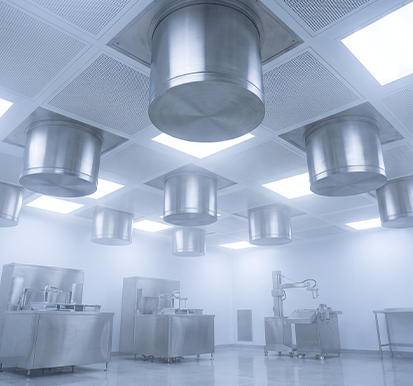
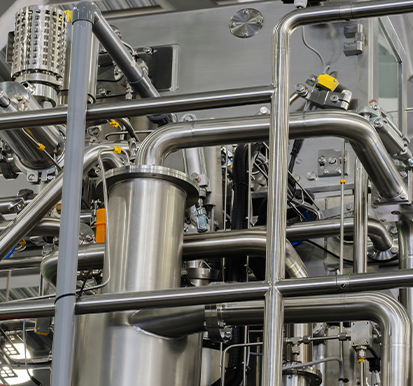
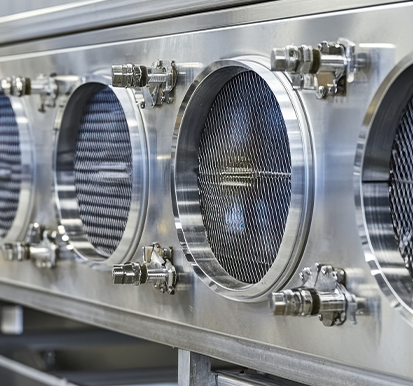
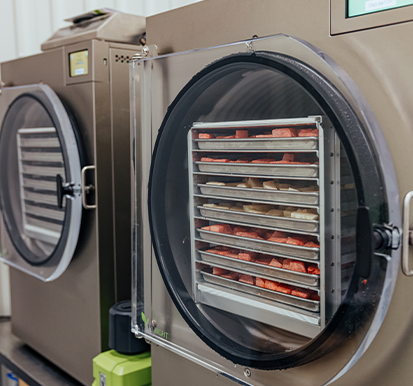
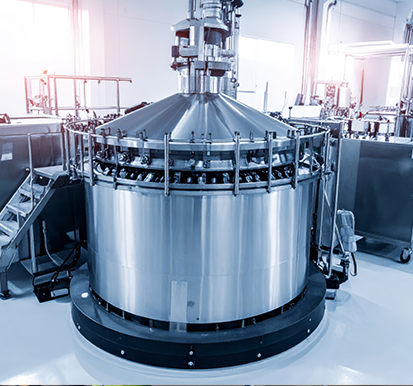
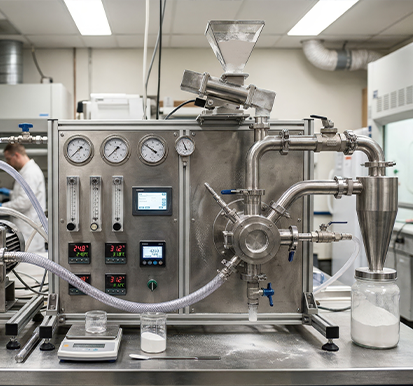
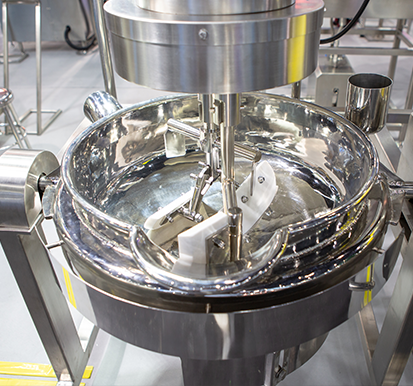
From chemical synthesis and fermentation to solvent recovery and final packaging, each unit operation in API manufacturing introduces distinct qualification requirements. PV executes across all of them.

Delivery Models
PV structures every API manufacturing engagement around your team’s resources, timeline, and program requirements.
PV takes full ownership of the validation program from initiation through quality closeout, including scope definition, risk assessment, protocol development, execution, deviation management, and final reporting.
Full-service engagements suit organizations without dedicated in-house validation resources or those managing a startup, expansion, or technology transfer that requires end-to-end program ownership.
PV resources embed directly within your Quality, Engineering, Manufacturing, and Validation organization, working under your SOPs, project management structure, and quality system.
Staff augmentation suits organizations with established validation programs that need experienced resources to maintain pace with production schedules, regulatory timelines, or change control backlogs without expanding headcount.
For programs where PV leads specific workstreams while your team manages others, PV structures engagements that distribute responsibility based on internal capacity and priority.
Hybrid support is particularly effective for phased qualification programs, area-by-area or system-by-system execution, and multi-site engagements where a single delivery model does not fit every workstream.
PV’s API Validation Capabilities
PV develops and executes commissioning, IQ, OQ, and PQ protocols with API-specific context built in, including critical process parameter controls, containment requirements for highly potent compounds, solvent handling and recovery systems, and cross-contamination prevention in multi-product facilities.
PV also embeds within client teams to support change control, document development, project management aligned to construction and validation timelines, drawing walkdowns across P&ID, loop, and electrical drawings, and archival support throughout the program.
A gap in system validation is a gap in your process validation program. PV performs risk assessments, validation planning, and computer system validation testing using FDA CSA principles and ALCOA+ data integrity standards across SCADA, DCS, PLC-controlled equipment, MES, LIMS, EBR, EMS, and QMS platforms.
Raw material storage areas, stability chambers, cold rooms, refrigerators, freezers, controlled-temperature transport systems, and finished API storage locations carry the same qualification expectations as manufacturing systems. PV designs and executes temperature mapping studies for controlled environments across API operations, with engineering-led sensor placement, calibrated data loggers, and audit-ready documentation as standard.
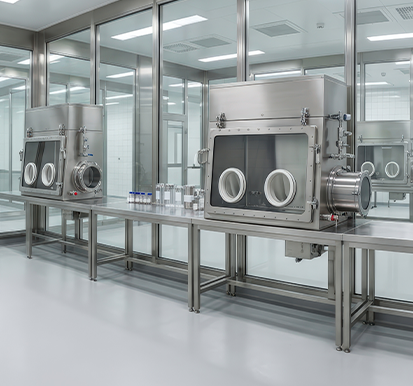
Airflow performance in API manufacturing environments, particularly those involving highly potent compounds, directly affects contamination control and worker safety. PV conducts critical airflow visualization studies using smoke and fog techniques to verify that airflow patterns support contamination control strategies in cleanrooms, isolators, and controlled environments, with documentation structured for qualification records and inspection readiness.
API manufacturers are increasingly moving toward digital validation and paperless compliance programs, driven by efficiency improvements, data integrity requirements, and lifecycle management needs. PV supports the adoption of digital validation to improve execution accuracy, audit trail management, and documentation traceability across your program.
PV provides consulting services to help API manufacturers navigate compliance, validation, and operational challenges, including gap assessments, remediation strategies, and regulatory preparation support.
Regulatory Alignment for API Manufacturing
PV designs every API manufacturing program to align with the specific regulatory frameworks governing your facility, processes, and target markets. Frameworks PV routinely designs against include:
- EU Annex 11
- ICH Q7
- FDA 21 CFR Part 211
- EU GMP Part II
- ICH Q9
- ICH Q10
- 21 CFR Part 11
- ALCOA+
- GAMP 5
PV’s API Manufacturing Validation Process
Every API engagement begins with defining project scope and objectives, identifying stakeholders and responsibilities, and developing a project schedule and validation strategy. PV participates in kickoff meetings and performs preliminary GMP and compliance assessments to ensure validation activities align with construction timelines and project deadlines.
PV reviews User Requirements Specifications, evaluates design documents, and assesses compliance with GMP and client standards. Requirements are verified to be testable and traceable before protocol development begins, establishing a clear foundation for everything that follows.
PV collaborates with client quality and engineering teams to identify product quality and patient safety risks, determine critical process parameters and quality attributes, and define the extent of testing required. Risk assessments follow ICH Q9 principles and inform the scope and structure of every protocol that follows.
PV authors qualification and validation protocols, defines acceptance criteria and testing requirements in collaboration with the client, and obtains client and QA approvals before execution begins. Protocols are structured to satisfy FDA, ICH Q7, and applicable regulatory expectations.
PV performs field verification and testing, executes qualification protocols, collects objective evidence, and documents results and discrepancies in real time. Validation activities are coordinated with manufacturing and quality teams to maintain GMP compliance and minimize operational disruption throughout execution.
Where test failures or discrepancies occur, PV investigates root cause, assesses GMP impact, and retests where necessary. Issues are identified and addressed proactively to keep projects on schedule and produce the documented evidence regulators require.
PV compiles and reviews all test results, verifies that requirements have been met, and documents overall validation conclusions in a structured summary report written for regulatory review and inspection readiness.
PV supports QA review and approval and manages turnover of the complete validation package, including readiness support for audits and inspections. Every engagement closes with documentation structured to withstand regulatory scrutiny.
Your Partner Across the Full API Manufacturing Lifecycle
For over 25 years, PV has served as the primary validation partner at one of the largest API manufacturing sites in the world, managing thousands of capital and expense projects across change control, protocol development, and project management. That experience, paired with a proven track record on accelerated timelines, means PV embeds quickly, works within your SOPs, and delivers inspection-ready results without disrupting GMP operations.
API Manufacturing Validation FAQs
Process validation in API manufacturing is documented evidence that a manufacturing process consistently produces an API meeting its predetermined specifications and quality attributes. It covers the full production sequence from raw material dispensing through final packaging and is a regulatory requirement under ICH Q7, FDA 21 CFR Part 211, and EU GMP Part II.
The primary framework is ICH Q7, which provides GMP guidance specific to active pharmaceutical ingredients, covering process validation, equipment qualification, and change control. Additional applicable standards include FDA 21 CFR Part 211, EU GMP Part II, ICH Q9 for risk-based approaches, ICH Q10 for quality system management, 21 CFR Part 11 for electronic records and CSV activities, GAMP 5, and EU Annex 11.
Commissioning verifies that systems and equipment are installed and operating according to design intent. Qualification, specifically IQ, OQ, and PQ, provides documented evidence that equipment and systems perform as specified under real operating conditions. Managing both under a coordinated program prevents documentation gaps at the handoff between phases.
A complete API validation program covers master plan development, commissioning and IQ/OQ/PQ execution for equipment and utilities, process performance qualification, computer system validation for critical systems, and ongoing change control and requalification support. Scope is determined by the regulatory frameworks governing your facility, your target markets, and the specific processes and systems involved.
Technology transfer validation demonstrates that a manufacturing process performs consistently at the receiving site and scale. Activities typically include equipment qualification at the new scale, process performance qualification under commercial conditions, and analytical method transfers where applicable. Scope and documentation standards are determined by the regulatory requirements of the target market.
Highly potent API manufacturing requires qualification programs designed around occupational exposure band (OEB) classification, containment system performance, and airflow control. Validation activities include IQ/OQ/PQ for isolators and containment systems and critical airflow visualization studies to verify contamination control and worker protection.
Computer System Validation ensures that computerized systems used in API production, including SCADA, DCS, MES, LIMS, and EBR platforms, perform as intended and meet GMP and data integrity requirements. PV applies FDA Computer Software Assurance principles and ALCOA+ data integrity standards, with documentation structured to address audit trails, electronic signatures, data integrity, and user access controls throughout the system lifecycle.
Validation activities are coordinated with production schedules well in advance, executed during planned shutdowns or between production campaigns where possible, and focused on GMP-critical elements through a risk-based approach. Phased qualification strategies, proactive deviation management, and experienced resources keep projects on track without downtime.
PV engages at any lifecycle stage, from new facility startups and manufacturing expansions through technology transfers, ongoing requalification, and remediation following regulatory findings. Early engagement during project planning consistently reduces downstream documentation gaps and schedule risk.
To see how PV has supported API manufacturing programs, visit our case studies.
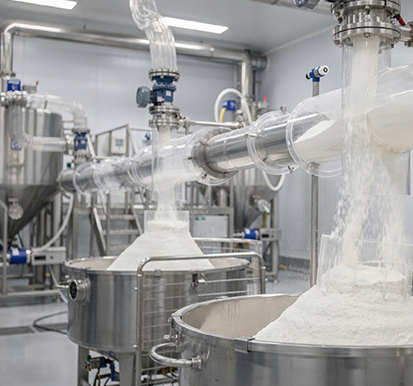
PV supports validation across small- and large-molecule manufacturing, fermentation, chemical synthesis, and solvent recovery. Unit operations in scope include raw material dispensing, chemical reaction and synthesis, crystallization, filtration, centrifugation, washing, drying, milling, blending, and final packaging and storage.
A full-service validation partner takes ownership from initiation through closeout, including scope definition, risk assessment, protocol development, execution, deviation management, reporting, and quality approval. The goal is to predict and navigate roadblocks proactively, react quickly to changes in scope or approach, and deliver a complete, inspection-ready validation package aligned with project schedules and client quality procedures.
PV supports validation across small- and large-molecule manufacturing, fermentation, chemical synthesis, and solvent recovery. Unit operations in scope include raw material dispensing, chemical reaction and synthesis, crystallization, filtration, centrifugation, washing, drying, milling, blending, and final packaging and storage.
PV qualifies reactors, filter dryers, centrifuges, crystallizers, dryers, mills and particle size reduction equipment, blenders and mixers, isolators and containment systems, material handling systems, HVAC systems, and process automation systems including SCADA, DCS, and PLC-controlled equipment.